To define risk and its connection to the protection of children and young people
To outline the Kirk Session’s responsibilities to assess and manage risk
Protecting children and young people from what?
While it is not possible to remove all risk, each Kirk Session should put in place policies and procedures to manage and reduce risk to the greatest possible extent.
Safeguarding risks are different from general health and safety risks. Your local church should already have in place risk assessments for health and safety, for example, fire safety. These are important for the general overall safety of all attending your ministries, including children and young people. These are not covered in this procedure.
This procedure deals with the risks associated with abuse and protecting children from the harms of abuse.
This means all risks associated with the following as outlined in Co-operating to Safeguard Children and Young People in Northern Ireland:
"The Children Order defines ‘harm’ as ill-treatment or the impairment of health or development. The Order states that ‘ill-treatment’ includes sexual abuse, forms of ill-treatment which are not physical; ‘health’ means physical and/or mental health; and ‘development’ means physical, intellectual, emotional, social or behavioural development.
"Impairment of health or development may include impairment suffered as a result of the ill-treatment of another person or abusive behaviour (as defined in section 2 of the Domestic Abuse and Civil Proceedings Act (Northern Ireland) 2021) directed at another person. The child may suffer such impairment regardless of whether they have witnessed, heard or been present during such ill-treatment or behaviour.
"There is no absolute definition of ‘significant harm’, as this will be assessed on a case by case basis. Article 50(3) of the Children Order states that ‘where the question of whether harm suffered by a child is significant turns on the child's health or development, his health or development shall be compared with that which could reasonably be expected of a similar child’.
"Where a HSCT suspects that a child is suffering, or likely to suffer significant harm, the HSCT has a duty under Article 66 of the Children Order to make enquiries, or cause enquiries to be made, to enable it to decide whether it should take any action to safeguard or promote the child’s welfare."
Therefore, every congregation and PCI organisation in Northern Ireland must conduct adequate risk assessment and management to protect children and young people from harm and promote their well-being.
A risk assessment is a legislative requirement in ROI under the Children First Act and statutory guidance. This is an area of good practice from ROI that the PCI wishes to adopt in NI and will ensure consistency across all congregations.
What does a risk assessment accomplish?
It helps us to identify potential risks
It helps us to consider how to/if we can manage those risks
It helps us to put in place policy and procedure to minimise risks
It helps us to review our risks and see if our procedures are working
It helps form the Child Safeguarding Statement
Who is responsible for risk assessment and management?
Kirk Session is responsible for the oversight of all aspects of a local congregation’s ministry. It must appoint adequately skilled individuals to conduct the risk assessments and draw these into a composite church document.
It must understand and review the Child Safeguarding Statement and any risks it is carrying, alongside the procedures to manage the risks.
It must ensure that everyone who needs access to the policy and procedures has it, and that the procedures are followed in its local activities and ministries.
It must take actions to protect from any immediate harm if individuals are not compliant with the procedures they have put in place.
The leader in charge of each activity is responsible for the rolling out of policies and procedures to keep children safe from harm. It must advise Kirk Session of any concerns and give feedback as to the procedures’ actual impact.
All leaders have a responsibility to ensure that they understand and work within the set policies and procedures. They should let the Leader in Charge know if they have any concerns.
Risk assessment process
Top tips for risk assessment
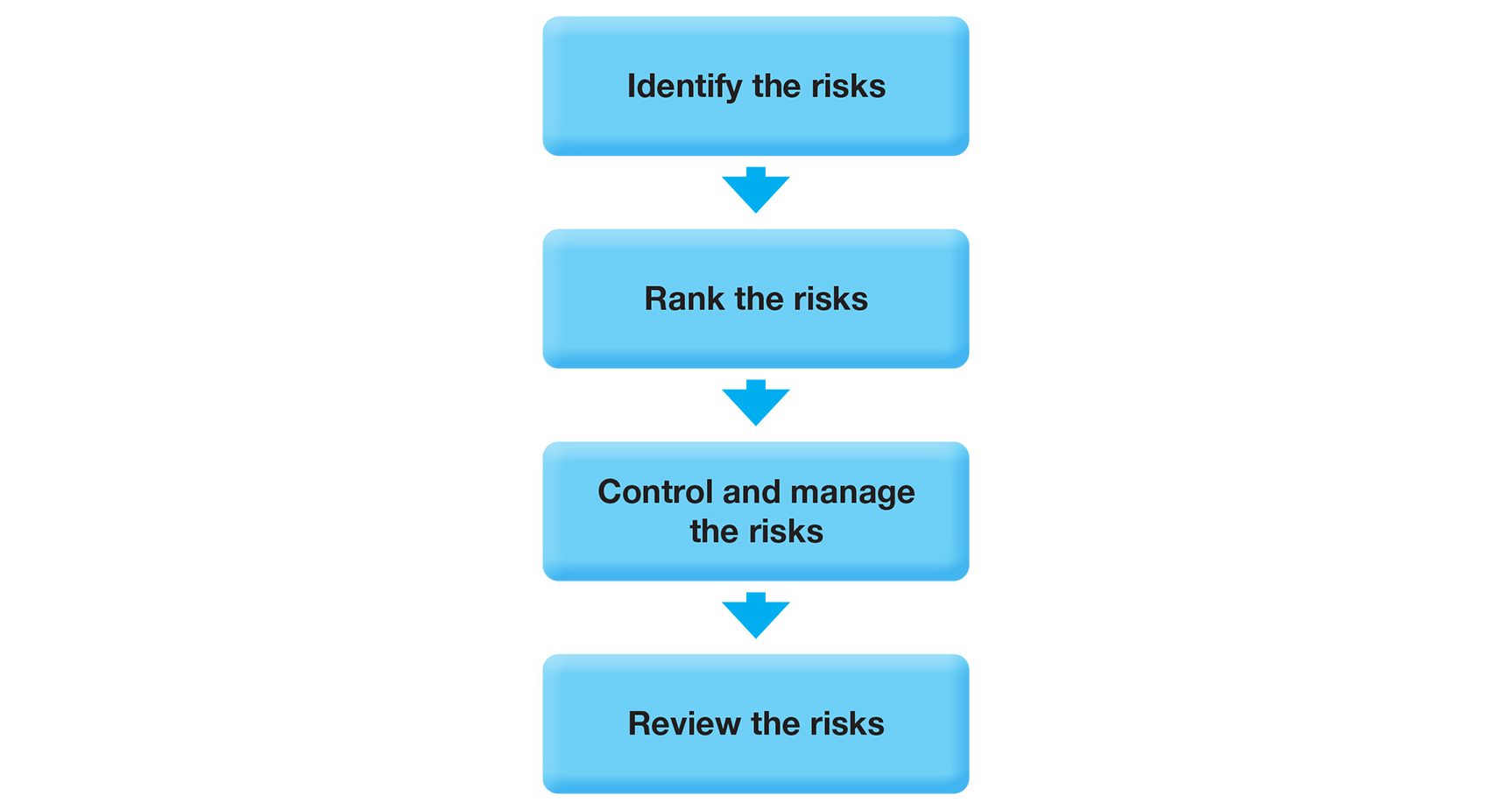
1. Identify the risks
Who or what may cause harm to the children and young people in your local congregation?
Involve all persons engaged in particular ministries; it is important to talk to leaders delivering the activities, the children and young people themselves, and family members
Consider your recent history; what have increasingly become any areas of concern?
Consider the community in which you minister; are there wider community factors to consider?
Consult the PCI denominational procedures for examples of common areas of risk that need attention; translate to your local area
Are you delivering a new ministry? This is an area for special consideration as it is new ground
2. Evaluate the risks
In other words, decide what are low, medium and high risks.
How often does the activity occur?
What is the likelihood of the risk?
What would the consequences of the risk be if it occurred?
High risk: Significant likelihood of occurrence of harm and potentially severe consequences. Requires immediate attention.
Medium risk: A moderate likelihood of occurring and potential consequences. May cause significant disruption or harm.
Low risk: Unlikely to cause significant harm.
Keep the assessment simple.
3. Control and manage the risks
What will now be done to manage the identified risks?
Who is responsible for managing the risks? (Kirk Session holds overall responsibility for the congregation. However, it cannot be present on-site during activities at all times. Therefore, the Leader in Charge of an organisation usually needs to manage the risks.)
What current controls are in place already? (What policies and procedures does PCI already have that you can highlight?)
What else do you need to do to manage the risks?
Write your local policy/procedures to guide everyone and set out the expectations for safe activities.
4. Review the risks
How are the policies and procedures working out?
All policies and procedures must be reviewed at least once every three years, signed off by Kirk Session and re-issued to relevant people.
Examples of safeguarding risks
Some risks to consider are but are not limited to:
Prepare a clear and short statement for all leaders and parents as to actions that will be taken immediately in all circumstances of a child missing or leaving an activity; make publicly available.
Security measures are part of general health and safety of the congregation.
Strangers on the premises during or after activities
PCI denominational procedures, especially: Chapter 9: Working safely with children
Security measures are part of general health and safety of the congregation.
The Presbyterian Church in Ireland believes that everyone has a responsibility to promote the welfare of all children and to keep them safe.
The Presbyterian Church in Ireland believes that children should never experience abuse of any kind.
The Presbyterian Church in Ireland is committed to safeguarding all children and protecting them from harm.
It is the policy of the Presbyterian Church in Ireland to safeguard all children and young people interacting with its ministry in any form. This includes actively protecting children from all forms of harm or abuse.
Principles and procedures to keep children and young people safe
These are outlined at length in our wider Safeguarding Children policies and procedures. The denominational procedures are available on the PCI website.
Our Safeguarding Children (NI) 2025 policy states:
The welfare of any child is paramount, no matter how brief their engagement with our denomination or how small the organisation they attend
All children, regardless of age, disability, gender, racial heritage, religious belief, sexual orientation or identity, have the right to equal protection from all forms of harm or abuse
We recognise that some children are additionally vulnerable because of the impact of previous experiences, communication needs, disabilities, adverse environments and other issues
The voices of children and young people are crucial to our learning and development as a safe denomination and we seek to always improve our engagement with them
[Name of local congregation] will therefore:
Ensure that there is an aligned accessible Designated Person, and a Deputy if needed
Maintain robust procedures for the recruitment, checking and monitoring of staff and volunteers working with children
Ensure that anyone engaging with children and young people through the denomination will be trained at least once every three years in how to recognise, respond to and report abuse as well as understand their role in the prevention of abuse
Ensure that they have in place clear processes for the reporting of abuse and the risk of harm, both externally to statutory services and internally through a clearly identified chain of responsibility
Ensure that identified risks to children and young people are assessed and managed
Ensure that any person of risk engaged in our ministries (for example, those with a history of serious offending behaviour) is safely managed, monitored and supported
Ensure that we have a timely, effective and sensitive approach to managing non-recent abuse disclosures
Ensure that children and young people from other countries are protected and cared for while engaging in our ministries and missions
Ensure that we have appropriate and actual methods for children and young people to voice their opinions and concerns, and be listened and responded to
Ensure that we have safe and confidential methods for managing information
(This risk assessment should be reviewed on an ongoing basis, and updated as required)
Potential risk categories
Risk 1
Risk of harm to a child by a staff member, volunteer or student, including risks related to online activities
Risk 2
Risk of harm to a child from a service user (adult or child), visitor or member of the public, including risks related to online activities
Risk 3
Risk of harm to a child due to a child protection or welfare concern not being recognised or reported by a staff member
Risk 4
Risk of harm to a child due to a child protection or welfare concern not being recognised or reported by a child
Risk 5
Risk of harm to a child due to not implementing Co-operating to Safeguard Children and Young People in NI and/or related SBNI guidance and policy
Risk 6
Risk of harm to a child due to a service failing to ensure safe access to ICT (including social media, web access and electronic contact)
Risk 1
Risk or harm to a child by a staff member, volunteer or student, including risks related to online activities
Risk description
There is a risk of harm to a child due to a volunteer or leader physically, emotionally or sexually abusing or neglecting a child, resulting in the child experiencing harm that seriously affects their health, development or welfare.
What could happen?
A child could be abused or neglected by a volunteer or leader while engaging with our ministries. This could happen through face-to-face contact with a child, or through the use of online systems.
How could it happen?
A volunteer or leader could:
arrange to meet with a child alone, within usual activity hours, for the purpose of abusing them
arrange to meet with a child, outside of working hours, for the purpose of abusing them
contact a child, by phone or through online platforms, for the purpose of grooming with the intent to abuse
abuse a child while providing intimate care as part of the service provision
neglect a child in their care, either wilfully or accidentally, resulting in that child being harmed
lose control and cause physical harm to a child
inappropriately prescribe and/or administer medication in a manner that causes harm to a child (has a serious effect on their health development and welfare)
A child could be harmed though the unauthorised taking and/or use of digital imagery by a staff member – for example, photographs and videos being shared without consent, modified or misused out of context, a vulnerable child being identified for the purpose of grooming and abuse.
Why might it happen?
This might happen because:
a staff member deliberately engages in this behaviour
of inappropriate levels of supervision – for example, child/adult ratios
of inappropriate levels of support or clinical supervision
of staff members not adhering to policy and procedures
staff members were not properly screened and vetted, as appropriate
of misuse of power and abuse of the position of trust that is inherent to work within a faith context
What might the impact be?
Harm to a child that seriously affects the child’s health, development or welfare
Kirk Session
Leaders in Charge of organisations
Leaders
Volunteers and helpers
Designated Liaison PersonMandated Person
Controls
Safeguarding Children (ROI) Policy and Procedures, Presbyterian Church in Ireland:
[Name of local congregation]is committed to the implementation of this Child Safeguarding Assessment and Risk Management and the practices and procedures that support our commitment to keeping children safe from harm while engaged in church activities.
This will be reviewed every two years or as soon as practicable after there has been a material change in any matter to which the statement refers.