Chapter 13: Assessing and managing risk: Procedure for the appointment of a relevant person and the congregation’s Child Protection Statement
Aim of the chapter
To define risk and its connection to the protection of children and young people
To introduce key legal requirements in Children First to appoint a relevant person, completion of risk assessments and development of the Child Safeguarding Statement
To outline the Kirk Session responsibilities to assess and manage risk
To provide a sample Child Safeguarding Statement
This chapter of the safeguarding guidance is written to help congregations in ROI understand and implement their statutory duties under the Children First legislation and guidance. It will introduce a range of concepts such as a developing a Child Safeguarding Statement for your congregation, carrying out a risk assessment and the role of a relevant person in this. These are all terms under the government’s guidance.
One of the objectives of the Children First legislation and guidance is to prevent harm coming to children when using services provided by an organisation, in our case our individual churches.
The Act places specific responsibilities on organisations in each of our churches to:
Keep children safe from harm
Carry out a risk assessment to identity any risks to children
Develop a Child Safeguarding Statement
Appoint a relevant person normally in our case the Minister, the Clerk of Session or the Convener of a vacancy to be the organisation’s first point of contact for the organisation’s risk assessment and Child Safeguarding Statement.
Process to appoint a relevant person and their role
The relevant person should be formally appointed and approved by the Kirk Session and this recorded in Child Safeguarding Statement. This appointment needs to be communicated to the Clerk of the Presbytery and held centrally for all congregations. A form is available to download here.
Any change to the relevant person needs to be endorsed by the Kirk Session and formally communicated to the Clerk of the Presbytery
All Presbyterian congregations in ROI are subject to this Act. A child safeguarding statement and associated risk assessment are mandatory.
The local Presbytery is responsible for ensuring that all congregations in its area have complied with and are reviewing the statement at least every two years.
Carrying out the risk assessment
The relevant person oversees the completion of a risk assessment considering any risk of harm that may come to a child while in the care of the church. This is different to general health and safety risks. The risk assessment is used by the relevant person to draft the Church’s Child Safeguarding Statement.
The risk assessment is intended to:
enable the local congregation to identify risks
use and develop PCI and local procedures to minimise the risk
review as a church whether adequate precautions have been put in to help reduce the risks
Following the guidance will help with the church’s risk assessment
Protecting children and young people from what?
While it is not possible to remove all risk, each Kirk Session should put in place policies and procedures to manage and reduce risk to the greatest possible extent.
Safeguarding risks are different from general health and safety risks. Your local church should already have in place risk assessments for health and safety, for example, fire safety. These are important for the general overall safety of all attending your ministries, including children and young people. These are not covered in this procedure.
This procedure deals with the risks associated with abuse and protecting children from the harms of abuse.
This means all risks associated with the following:
Section 11(1)(a) of the Children First Act 2015 defines risk as ‘any potential for harm to a child while availing of the service’.
Section 2 of the Act defines harm as follows: ‘harm means in relation to a child – (a) Assault, ill-treatment or neglect of the child in a manner that seriously affects or is likely to seriously affect the child’s health, development or welfare, or (b) Sexual abuse of the child, whether caused by a single act, omission or circumstance or a series or combination of acts, omissions or circumstances or otherwise.’
What does a risk assessment accomplish?
It helps us to identify potential risks
It helps us to consider how to/if we can manage those risks
It helps us to put in place policy and procedure to minimise risks
It helps us to review our risks and see if our procedures are working
It helps form the Child Safeguarding Statement
Who is responsible for risk assessment and management?
Kirk Session is responsible for the oversight of all aspects of a local congregation’s ministry. It must appoint adequately skilled individuals to the role of relevant person and ensure conduct by them of the risk assessment..
It must understand and review the Child Safeguarding Statement and any risks it is carrying, alongside the procedures to manage the risks.
It must ensure that everyone who needs access to the policy and procedures has it, and that the procedures are followed in its local activities and ministries.
It must take actions to protect from any immediate harm if individuals are not compliant with the procedures it has put in place.
The leader in charge of each activity is responsible for the rolling out of policies and procedures to keep children safe from harm. They must advise Kirk Session of any concerns and give feedback as to the procedures’ actual impact.
All leaders have a responsibility to ensure that they understand and work within the set policies and procedures. They should let the leader in charge know if they have any concerns.
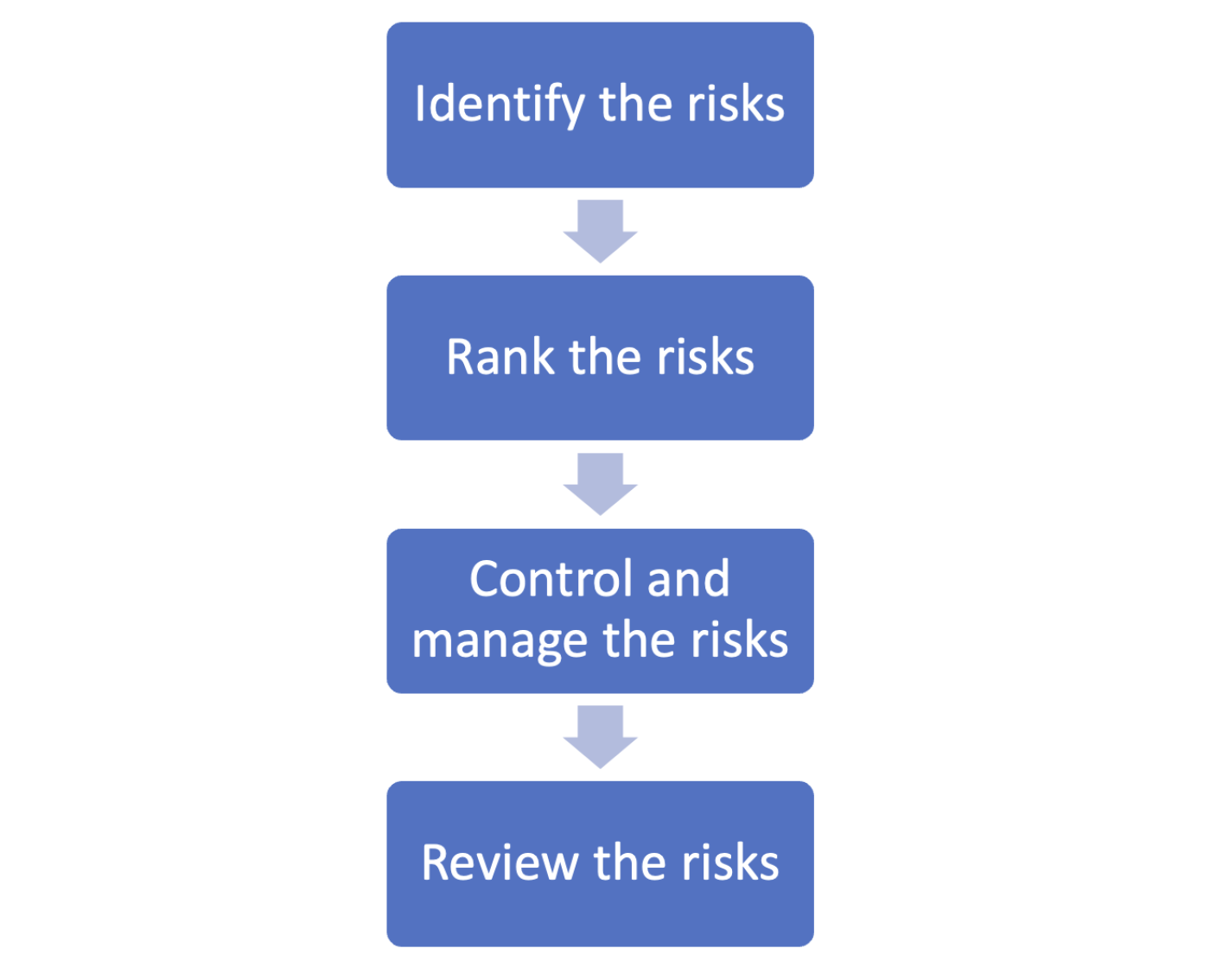
Top Tips for Risk Assessment
1. Identify the risks
Who or what may cause harm to the children and young people in your local congregation?
Involve all persons engaged in particular ministries; it is important to talk to leaders delivering the activities, the children and young people themselves, and family members
Consider your recent history; what have increasingly become any areas of concern?
Consider the community in which you minister; are there wider community factors to consider?
Consult the PCI denominational procedures for examples of common areas of risk that need attention; translate to your local area
Are you delivering a new ministry? This is an area for special consideration as it is new ground
2. Evaluate the risks
In other words, decide what are low, medium and high risks.
How often does the activity occur?
What is the likelihood of the risk?
What would the consequences of the risk be if it occurred?
High risk: Significant likelihood of occurrence of harm and potentially severe consequences. Requires immediate attention.
Medium risk: A moderate likelihood of occurring and potential consequences. May cause significant disruption or harm.
Low risk: Unlikely to cause significant harm.
Keep the assessment simple.
3. Control and manage the risks
What will now be done to manage the identified risks?
Who is responsible for managing the risks? (Kirk Session holds overall responsibility for the congregation. However, it cannot be present on-site during activities at all times. Therefore, the Leader in Charge of an organisation usually needs to manage the risks).
What current controls are in place already? (What policies and procedures does PCI already have that you can highlight?)
What else do you need to do to manage the risks?
Write your local policy/procedures to guide everyone and set out the expectations for safe activities.
4. Review the risks
How are the policies and procedures working out?
All policies and procedures must be reviewed at least once every three years, signed off by Kirk Session and re-issued to relevant people
Examples of Safeguarding Risks
Some risks to consider are but are not limited to:
Prepare a clear and short statement for all leaders and parents as to actions that will be taken immediately in all circumstances of a child missing or leaving an activity; make publicly available.
Security measures are part of general health and safety of the congregation.
Strangers on the premises during or after activities
PCI denominational procedures; especially: Chapter 9: Working safely with children;
Security measures are part of general health and safety of the congregation.
The Children First Act 2015 requires organisations to prepare a Child Safeguarding Statement using the risk assessment and specifying the service being provided and the principles and procedures to be observed to keep children safe.
The obligations in the Child Safeguarding Statement include:
Keeping children safe from harm when using church services
Carrying out a risk assessment
Developing a Child Safeguarding Statement, which must include the written risk assessment and the procedures in place to cover each of the elements below:
Manage any risk identified
Investigate allegations against staff members around child protection
Safe selection and recruitment of staff
Provide information and training to staff, volunteers, Elders and others on safeguarding
Enable members of the congregation, Mandated Persons and Designated Liaison Persons to make a report to Tusla or the Garda
Maintain a list of persons in the congregation who are Mandated Persons under the legislation
Appoint a relevant person for the congregation for the purposes of the Act
A template document to develop a Child Safeguarding Statement is included. The procedures that you use will be a mix of local congregation procedures and the PCI’s ROI Child Safeguarding Procedures, available on the Church’s website.
The aim is to have an accessible, useable document, which needs to be widely available to parents, children and through church premises.
Statement sample template
Use the headings below and customise for your church.
1. Name of congregation
2. Nature of service and principles to safeguard children from harm (a brief outline of what our service is, what we do and our commitment to safeguard children):
The welfare and best interests of the child are paramount
All children have a right to be listened to, respected and protected
Child protection is everyone’s responsibility
We treat all children equally and without prejudice
We are committed to multi-agency cooperation where necessary
Risk assessment
We have carried out an assessment of any potential for harm to a child while availing of our services including the area of online safety when accessing the internet. Below is a list of the areas of risk identified and the list of procedures for managing these risks.
Risk assessment summary examples
Samples to customise and develop
Risk category
Potential harm identified
Controls and procedures in place
Staff/Volunteer Interaction
Risk of physical, emotional or sexual abuse
Garda vetting and reference checks; Code of Conduct; mandatory Children First training; supervision and monitoring
Online Activities
Risk of cyberbullying, grooming, exposure to harmful content
Health and safety checks; emergency procedures; First Aid training
Failure to Report Concerns
Risk of harm continuing due to non-reporting
Clear reporting procedures; Designated Liaison Person; regular refresher training
Trips/Outings
Risk of harm during off-site activities, inadequate supervision
Parental consent forms; adequate supervision ratios; risk assessment for each outing
Visitors to Premises
Risk from unvetted individuals
Visitor sign-in policy; restricted access to children; staff accompaniment at all times
Procedures
Include the following information and links to both PCI policies and local church procedures:
Our Child Safeguarding Statement has been developed in line with requirements under the Children First Act 2015, the Children First: National Guidance, and Tusla’s Child Safeguarding: A Guide for Policy, Procedure and Practice. In addition to the procedures listed in our risk assessment, the following procedures support our intention to safeguard children while they are availing of our service:
Procedure for the management of allegations of abuse or misconduct against workers/volunteers regarding a child availing of our service
Procedure for the safe recruitment and selection of workers and volunteers to work with children
Procedure for provision of and access to child safeguarding training and information, including the identification of the occurrence of harm
Procedure for the reporting of child protection or welfare concerns to Tusla
Procedure for maintaining a list of the persons (if any) in the relevant service who are Mandated Persons
Procedure for appointing a relevant person
All procedures listed are available upon request.
Implementation
We recognise that implementation is an ongoing process. Our service is committed to the implementation of this Child Safeguarding Statement and the procedures that support our intention to keep children safe from harm while availing of our service. This Child Safeguarding Statement will be reviewed __________________ or as soon as practicable after there has been a material change in any matter to which the statement refers.
Signed:
Minister or Convenor of a Vacancy [insert name and contact details]