Chapter 6:
Safeguarding risk assessment and management
Aim of the chapter
General safety for all will be best managed when assessed for risk, which is the process of examining whether activities, events or individuals could possibly be a source of harm, and reducing that harm.
Risk assessment is essential for determining potential incidents and accidents, assessing their likelihood, our tolerance to cope with them, and the potential consequences.
Risk management gives us an opportunity to predict the likelihood for any potential future events that could adversely impact those attending our churches and organisations, and to assess whether these are tolerable and if we can take any action to prevent or minimise the impacts.
Risk assessment in terms of safeguarding is as important as risk assessments around general health and safety issues, like fire safety.
It is, however, different from general health and safety.
Responsibilities
The Kirk Session and church Committee are responsible for any congregation-wide risk assessments (fire safety, water safety, food hygiene, etc.).
In terms of these procedures they must also consider any safeguarding risks and manage those reasonably.
Kirk Session is responsible for the oversight of all aspects of a local congregation’s ministry. It must appoint adequately skilled individuals to conduct the safeguarding risk assessments.
It must ensure that everyone who needs access to the policy and procedures has it, and that the procedures are followed in their local activities and ministries.
It must take actions to protect from any immediate harm if individuals are not compliant with the procedures they have put in place.
The Leader in Charge of each activity is responsible for the rolling out of policies and procedures to keep adults safe from harm. They must advise Kirk Session of any concerns and give feedback as to the procedures’ actual impact.
The Leader in Charge of each organisation that works with adults at risk within the church must undertake a set of relevant safeguarding risk assessments for the activities the organisation is facilitating. These must be shared with the Adult Safeguarding Champion (Designated Safeguarding Person).
All leaders have a responsibility to ensure that they understand and work within the set policies and procedures. They must let the Leader in Charge know if they have any concerns.
Accidents and incidents (adults)
All accidents and incidents must be recorded in writing. All those in a position of leadership must know the church’s procedures for making a record and where those are stored.
Where the accident, incident or near miss is in some way connected to a safeguarding matter, it must be drawn to the attention of the Adult Safeguarding Champion for appropriate action.
Risk assessment process
Top tips for risk assessment
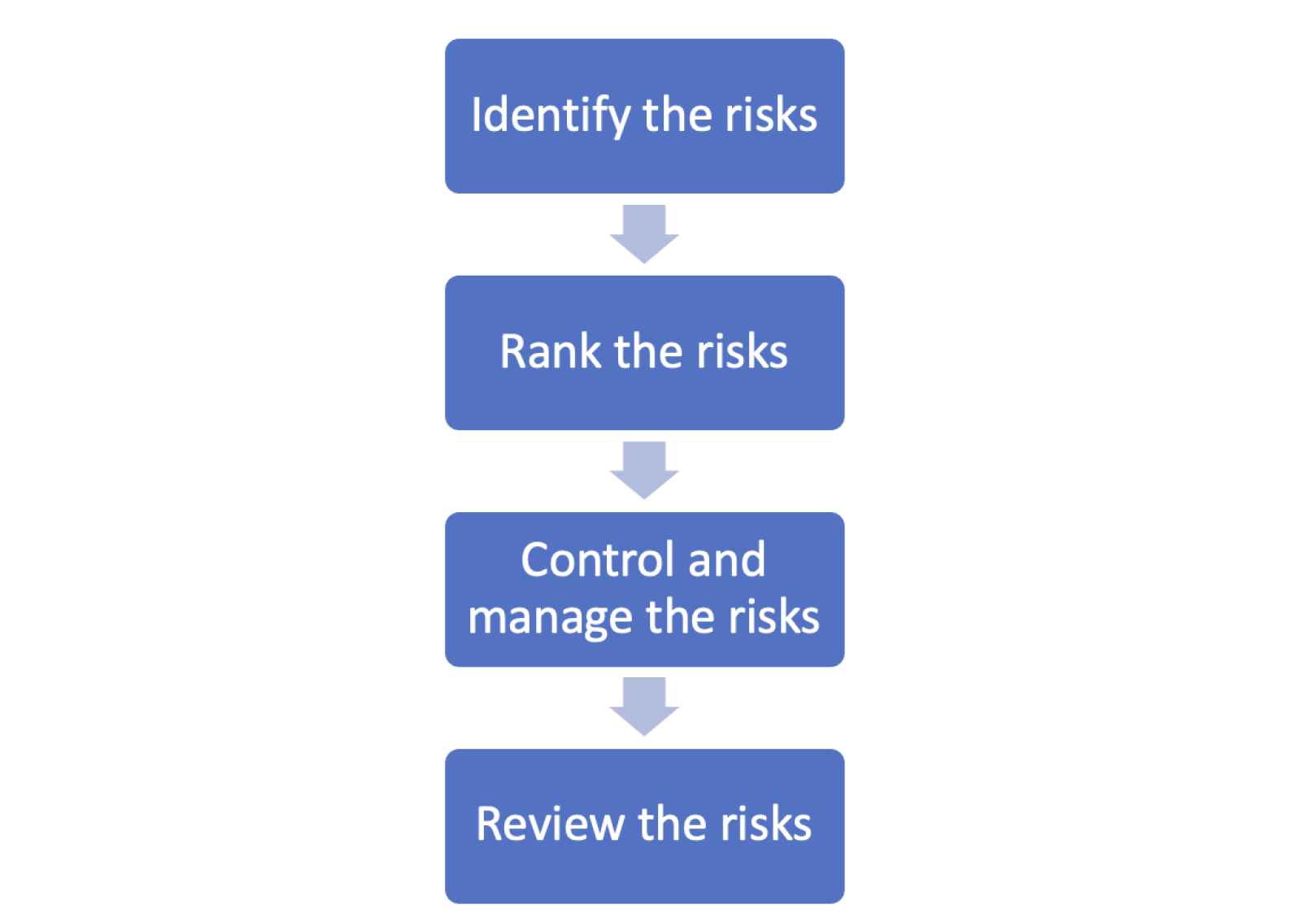
Identify the risks
Who or what may cause harm to the adults at risk in your local congregation?
- Involve all persons engaged in particular ministries; it is important to talk to leaders delivering the activities, the adults themselves and family members
- Consider your recent history; what have increasingly become any areas of concern?
- Consider the community in which you minister; are there wider community factors to consider?
- Consult the PCI denominational procedures for examples of common areas of risk that need attention; translate to your local area
- Are you delivering a new ministry? This is an area for special consideration as it is new ground
Evaluate the risks
In other words, decide what are low, medium and high risks.
- How often does the activity occur?
- What is the likelihood of the risk?
- What would the consequences of the risk be if it occurred?
High risk: Significant likelihood of occurrence of harm and potentially severe consequences. Requires immediate attention.
Medium risk: A moderate likelihood of occurring and potential consequences. May cause significant disruption or harm.
Low risk: Unlikely to cause significant harm.
Keep the assessment simple.
Control and manage the risks
What will now be done to manage the identified risks?
- Who is responsible for managing the risks? (Kirk Session holds overall responsibility for the congregation. However, it cannot be present on-site during activities at all times. Therefore, the Leader in Charge of an organisation usually needs to manage the risks.)
- What current controls are in place already? (What policies and procedures does PCI already have that you can highlight?)
- What else do you need to do to manage the risks?
- Write your local policy/procedures to guide everyone and set out the expectations for safe activities.
Review the risks
How are the policies and procedures working out?
- All policies and procedures must be reviewed at least once every year and signed off by Kirk Session, and re-issued to relevant people
Examples of safeguarding risks
Some risks to consider are but are not limited to:
The point of risk assessment in safeguarding is to identify and evaluate potential risks to vulnerable individuals, ensuring their safety and well-being, and to put reasonable actions in place to mitigate risks.