Earlier this month the Moderator of the Presbyterian Church in Ireland (PCI), Right Reverend Dr Richard Murray, visited a small Presbyterian congregation in Kraków, Christ the Saviour, one of only four churches that make up the Evangelical Presbyterian Church in Poland (EPCP).
News
The hope & the horror - Moderator's Polish visit
With the oldest of PCI’s congregations dating back to 1613, Dr Murray’s visit was an opportunity to offer encouragement and support of the largest Presbyterian church in Ireland, to the fledgling Polish Presbyterian denomination, whose ‘oldest’ congregation was a little more than nine years old.
Talking about PCI's new partnership, Dr Murray said, “My primary focus was to build and deepen our relationship with the EPCP, which is very much a new partnership. It was also about encouraging mutual support and learning from one another - a time of fellowship and an opportunity see and to hear first-hand the vision and the hope that this new reformed church has, especially to help people come to know the Lord Jesus personally”
A visit of contrasts
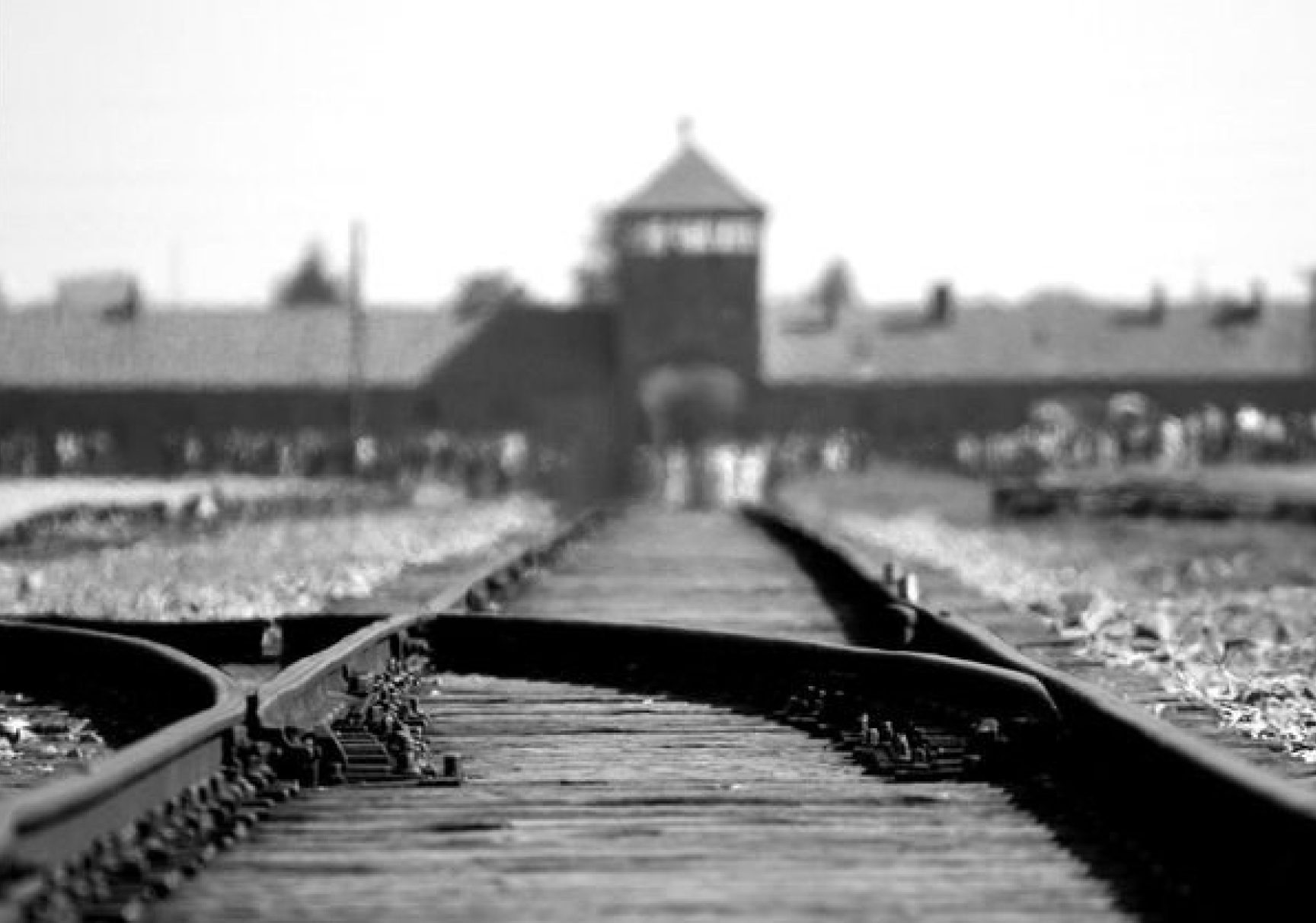
During his four-day visit, he also made a poignant journey to Auschwitz, which isn’t far from Kraków. With a keen interest in the Second World War, Dr Murray said that nothing could really prepare you for the darkness and horror of the place, something he reflected on in his recent Christmas message.
A first for a Moderator
Accompanied by PCI's Secretary to the Council for Global Mission, Rev Uel Marrs, the visit to Poland is thought have been the first by a PCI Presbyterian Moderator. It was certainly the first time that a Moderator had preached in a congregation of the Evangelical Presbyterian Church in Poland. Its lead pastor, the Ukrainian born minister, Rev Sashko Nezamutdinov, spoke at June’s General Assembly in Belfast. A number of PCI congregations have supported the EPCP over the years, and 2015 Mr Nezamutdinov spent a three-month internship in Richhill Presbyterian in County Armagh. He was ordained only last year.
Having travelled widely, Dr Murray continued, “It is always good to experience different places, and I have travelled in Austria and Germany, but had never ventured into Eastern Europe. While an ancient city with a large medieval square and cathedral, Kraków had a ‘Soviet-era’ feel to it in parts, with large concrete official looking buildings, and old-fashioned trams - mixed with modern commuter trains - which we got on and off.
“I’d been looking forward to my visit, as I had met Sashko in June and was encouraged by his vision for Christ the Saviour and the Church in Poland. This was clearly stated on the liturgy for the Sunday service that I preached at. It said that they “…desire[d] to be a vibrant Protestant church in Krakow that will serve Jesus Christ, each other, and the people of the city. We endeavour to be a church that fits the culture of Krakow today, a church that reaches out to both the local Poles and people from all backgrounds…’
“It went on to say that it was also a ‘congregation that is biblical, [and] culturally relevant’, which was very apparent. It was a strategic decision because in a country that is overwhelmingly culturally Catholic – and a city where Pope John Paul II was archbishop for 14 years - it would be a big leap for many to come from a Catholic church to a Presbyterian one.
“With that in mind, to try and bridge that cultural gap, the church has Communion every Sunday. The elements are familiar to those who once worshipped in a Catholic setting, as they comprise a wafer and alcoholic/alcohol-free wine. It was a liturgical service, with a full liturgy that included prayers, readings and responses, so it would have a familiar feel to it, but all in a reformed theological context.
“That Second Sunday in Advent, I preached on Ephesians 2, ‘Christ our peace’. It was a young congregation of around 40 people, and I was appropriately robed for the service, having borrowed a traditional woollen ‘Geneva gown’ from Sashko.
Preaching in a former café
The other three EPCP congregations are in Warsaw, where there are two, with another in Gdansk in the north of the country. With six student ministers in training and, as of yet, no congregations for them, the Moderator said that this was surely a mark of their passion for the Gospel and their intent to build Christ’s Kingdom, and a new denomination. “At the same time, they don’t have anything that resembles a traditional church building, instead they meet in shops and rent other vacant buildings. I preached in a former café that Sunday on the outskirts of the city,” Dr Murray said.
During his visit the Moderator also met Christ the Saviour’s kirk session, and heard about its ministry with Ukrainian refugees, since the start of the war. “I also heard about the Church’s fast-growing publishing ministry. Translated by professional translators, since 2017 over 70 Christian texts have been translated into Polish, printed and sold on line.
Talking about some of the texts, Dr Murray said, "These include Bibles, devotionals and other Christian literature by some well-known authors, such as Johnathan Edwards, RC Sproul and Tim Keller. I was actually surprised that this niche market, wasn’t so niche after all, but an important one that feeds a genuine spiritual hunger,” Dr Murray said.
“As we seek to plant new churches and worshipping communities here at home, we should pray for our brothers and sisters in the EPCP, who are not only planting congregations, but building a new denomination in Poland.”
On his last day in the country, along with one of EPCP’s student ministers, Dr Murray left Kraków and travelled west for an hour, or so, to a place that has become synonymous with mans’ inhumanity to man – Auschwitz.
‘You are not visiting a tourist attraction today…’ “Even before I visited, it was hard to get your head around the simple reality that the evil which took place there actually happened within living memory. Wrapped up against the cold, which was penetrating that day, our guide told us, ‘You are not visiting a tourist attraction today, it is a mass grave you’ve come to’. I counted 50 coaches in the car park. The only photo I took was of the main gate,” Dr Murray said.
“As we were guided around Auschwitz, and the massive adjacent camp at Birkenau, the next four hours were harrowing and unforgettable. The gas chambers we stood in, the electric fences, rows of barracks, the crematoria, and the gallows that we saw, all instruments of systematic murder and unspeakable evil. You just come away stunned and numb.”
Returning home that evening, during a six-hour delay at the airport, Dr Murray re-read a book that he had bought earlier that day. In ‘Night’, by who won the Nobel Prize for Peace in 1989, wrote about having been departed from Hungary to Auschwitz in 1944 as a teenager. The Moderator said that reading it again, having stood in one of the barracks that morning, "the words on the page were even starker. In a famous passage, Ellie Wiesel wrote:
NEVER SHALL I FORGET that night, the first night in the camp, that turned my life into one long night seven times sealed.
Never shall I forget that smoke.
Never shall I forget the small faces of the children whose bodies I saw transformed into smoke under a silent sky.
Never shall I forget the flames that consumed my faith for ever.
Never shall I forget the nocturnal silence that deprived me of all eternity of the desire to live.
Never shall I forget those moments that murdered my God and my soul and turned my dreams to ashes.
Never shall I forget those things, even were I condemned to live as long as God himself.
Never.’
“Powerful writing. My visit to Poland really was a visit of contrasts - of hope on the one hand, and of horror on the other. The sheer contrast of having gone from spending an uplifting few days hearing about and encouraging what is being done in Kraków, to visiting a place of such utter darkness, was so stark.
“While we must never forget what happened at Auschwitz, we need to give thanks and pray for those planting churches and working in Christ’s name. As the Apostle Paul reminds us in Romans 10:15, ‘…As it is written, “How beautiful are the feet of those who preach the good news!”’”
Text quoted above is from 'Night' by Ellie Wiesel, translated by Marion Wiesel and published by Barnes & Noble.